
Learning to Love Good Friday … Again
Growing up, Good Friday was my favorite day on the Christian calendar. Why? Because the brutality of that day, more than any other, reinforced my understanding of the world. My understanding of the crucifixion both legitimized and gave meaning to my self-understanding. In a very twisted way, it both affirmed and normalized my cognitive reality.
Tonight, I’m learning to fall in love with Good Friday again, but it’s been quite a journey to reach a place where that’s possible. Here are a few thoughts on then and now.

My Basic Framework, Then
Self-hatred serves as the foundation of my world. That isn’t hyperbole. To the contrary, hate might not be a harsh enough of a word. I detested my gangling body, despised my social ineptitude, and viewed myself as worthless. I was the singular exception to the rule that God doesn’t make junk.
In contrast to my depravity stood God. Perfection. Beauty. Holiness. The very antithesis of me.
That last adjective, holiness, is the worst. Why? Because God’s holiness required God’s distance. Being holy, God fled from that which is unholy … and I embodied all that is unholy. That meant a God who supposedly self-identified with love couldn’t come near and embrace me no matter how desperately I needed it.
What atrocity I committed as a people pleasing, non-rebellious, polite, pressing towards being an Eagle Scout preteen I’m not sure. But Sunday services made it clear I was a “poor miserable sinner” and “justly deserving temporal and eternal punishment.” My daily life offered abundant reinforcement.
No doubt, in the decades that followed, I would find ways to validate this experience. Ultimately, I tangibly enacted behavior that gave me a legitimate reason to feel this way, but the turmoil within had ravaged my soul for decades beforehand. As Freud once wrote:
In many criminals, it is possible to detect a very powerful sense of guilt that existed before the crime and is therefore not its result, but it’s motive. It is as if it was a release to be able to fasten this unconscious sense of guilt onto something real and immediate.
My Love of Good Friday, Then
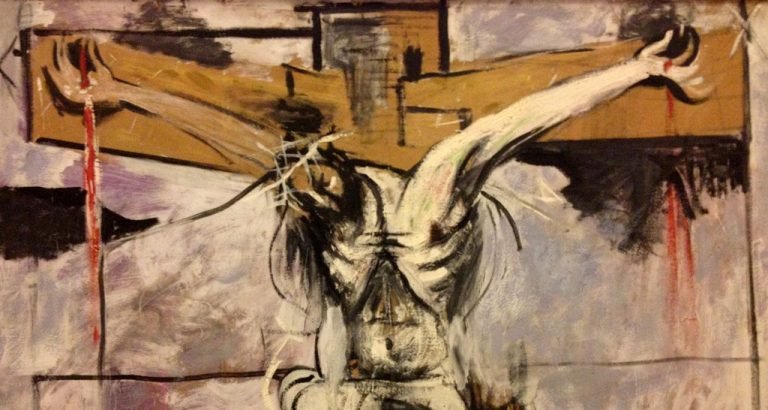
So why love Good Friday? As I interpreted it at the time, Good Friday was the day a holy God unleash divine wrath and punishment towards unholy people. However, rather than punishing those who deserved it (like me), God brutalized his perfect son, Jesus.
Theoretically, this is supposed to be good news. The theory says the crucifixion fully satisfies God’s anger towards sin and unholy people. Resultantly, God can now draw near believers because Jesus’ perfection covers them. But in that system, I never really made it past Good Friday to Easter Sunday … sort of like the rest of the year I never made it past the confession of sin to the announcement of forgiveness (it’s a liturgical thing).
Instead of bringing me to some place of comfort, the day affirmed and legitimized my understanding of the world. I am that horrible. I deserve the pain I experienced. God is that distant. There is no hope. As sad as it sounds, that normalizing of my world felt good and kept me going. It justified the pain of being alive. It gave me a reason to embrace the depression, deal with the pain, and keep pressing forward.
Before I get into the next section, I will state up front that I’m well aware how many folks reading it will disagree. I certainly welcome your questions in the comments below. That said, I will point out that a theological defense of what I grew up with isn’t all that helpful. Now, how I understand parts of the Bible that don’t seem to jive with your perspective … that I’m happy to talk about.
My Basic Framework, Now
I lived in that world well into my thirties. But seven years ago, while teaching theology at the Lutheran Theological Seminary in Pretoria, South Africa, I began what, at the time I saw as a theological crisis, but now see it as my entry into liberation. While there isn’t time here to share the whole journey, a radical shift in my understanding of God’s holiness changed the way I read and understand the Bible.
Much of this actually ties back to a book I read in Seminary but didn’t understand at the time, God Crucified. The general gist is that the gospel writers bound Jesus to two 1st Century Jewish characteristics of the God of Israel (Creator and Lord) while simultaneously restoring two oft-forgotten characteristics highlighted during the Exodus (salvific activity and a name). The end point is that in Jesus is one with the divine and we see what God is like in Jesus.
If that’s the case, then what does it mean for God to be holy? It doesn’t mean that God withdraws from that which is sinful, rather, God is holy precisely because God lovingly draws close to that which is other. That, in and of itself, makes the other valuable, worthy, and beautiful. Because God draws close to me, I am valuable, worthy, and beautiful.
My Love of Good Friday, Now
With this renewed framework, Good Friday is no longer about God punishing Jesus for the sin of the world (it also changes the way we read the Old Testament).
Instead, Jesus bears the sin of the world as people unleash all of their hatred, anger, and violence upon him. However, because violence is never redemptive, Jesus breaks the cycle and takes sin to the grave, all the while declaring, “Father forgive them for they know not what they do.”
In my celebration tonight, I remember that Jesus offers to take to the grave both the sin I’ve committed and the sin committed against me. In the resurrection on Sunday, I know the Father vindicates the way of Jesus and it is in Jesus that I truly know what God is like.
Functionally, this results in a completely different Good Friday experience. Rather than affirming and legitimizing shame and self-hatred, tonight I believe I’m valuable and worthy of love. Instead of justifying my pain and encouraging me to live with it, tonight I find it redeemed at the cross. Contrary to giving me a reason to embrace depression, tonight I step into a new way of living under the kingship of God.
I’m learning to love Good Friday again … and for the first time, I’m beginning to feel okay calling it good.



4 Comments
Comments are closed.